
Island Sound Studios:
Just a Little Touch of Paradise
Amphion Two18 ? … They’re a forensic, surgical sonic tool.
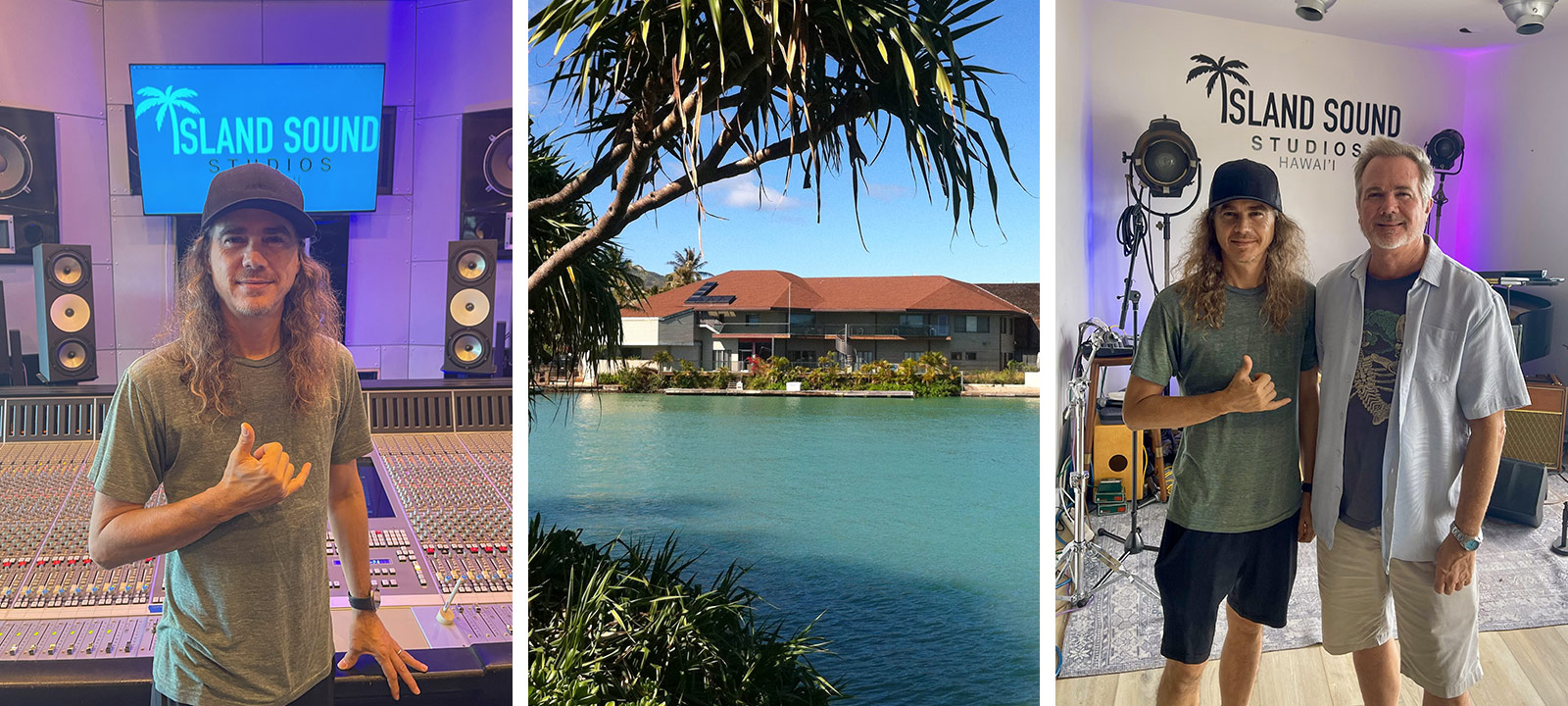
Honolulu, USA – We recently visited Island Sound Studios, located in Hawaii-kai, a suburb just east of Honolulu, and nestled in an exquisitely scenic waterfront community on the island of Oahu. We were there to speak to the Spicer brothers – Kyle and Bryan – the new and visionary owners/operators of this iconic venue – and the only world-class recording facility in the State of Hawaii. From the moment its front doors swing open, and you take your first steps inside, it’s no wonder why so many of the music industry’s most influential artists and producers choose to want to record there. But the full story of this 10,000 square foot, two-storey production space, with its Billboard global listing as one of the Top Recording Studios, began a quarter of a century ago. And we at Amphion Loudspeakers have been pleased to be a tiny part of its history …
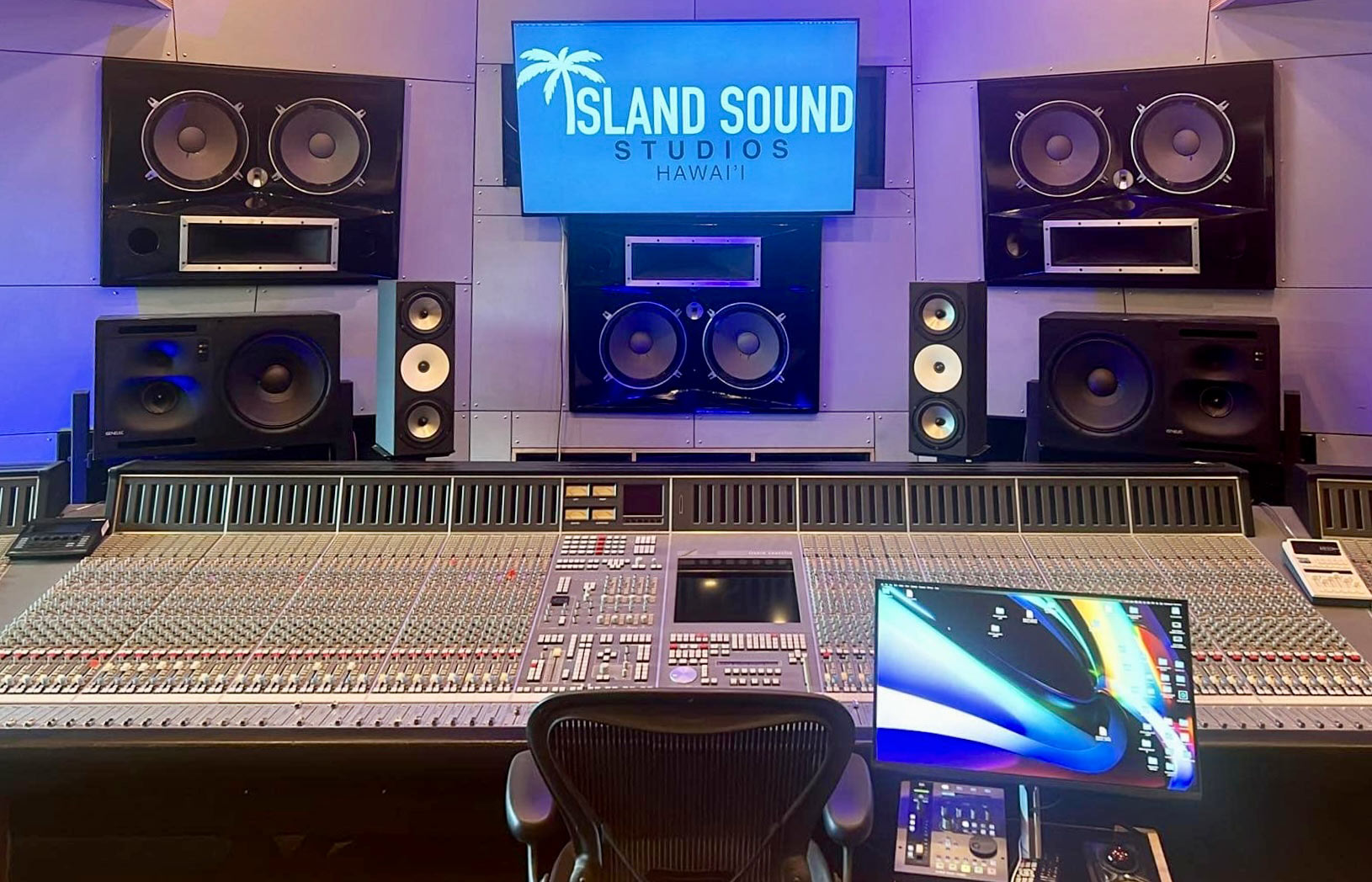
Established in 1999 as TK Disc Destination, for a then build-price of US$12 million, it was designed as a private, state-of-the-art studio for the legendary Japanese producer/artist/songwriter Tetsuya Komuro – lauded as the most successful music producer in Japan music history. It then changed names and hands in 2003, operating commercially as Avex Honolulu, and then finally as Island Sound Studios in 2012. For much of its 25 year life, award-winning producer/musician/songwriter, Gaylord Holomalia had been at the helm as studio manager and engineer, until Kyle and Bryan acquired the facility in late 2022. Gaylord’s own music-bio is substantial, and he continues as keyboardist for the popular band Kalapana, a US pop-rock outfit from Honolulu, who have opened for The Moody Blues, EW&F, and other stellar acts too.
The volume of artists that have been through Island Sound Studios – local, mainland, and global names – has been enormous, as has their level of celebrity: Beyoncé, Kanye West, Dr. Dre, Dwayne Johnson, Elton John, Mariah Carey, John Legend, Henry Kapono, Eddie Vedder, Timbaland, Jay-Z, RZA, Big Sean, Dwele, Eminem, Jake Shimabukuro, Eryka Badu, Konishiki, Def Tek, Ayumi Hamasaki, Namie Amuro, Kalapana, Empire of the Sun… not counting the many film and television soundtrack productions that continue to today. However, the fortunes of this massive studio-complex have not always been good, as past owners had not wanted to shell out for the substantial maintenance and upgrades necessary to keep this studio fully functional, leading to its closure in early 2022 – a jolt felt across the islands and global music/audio fraternity.
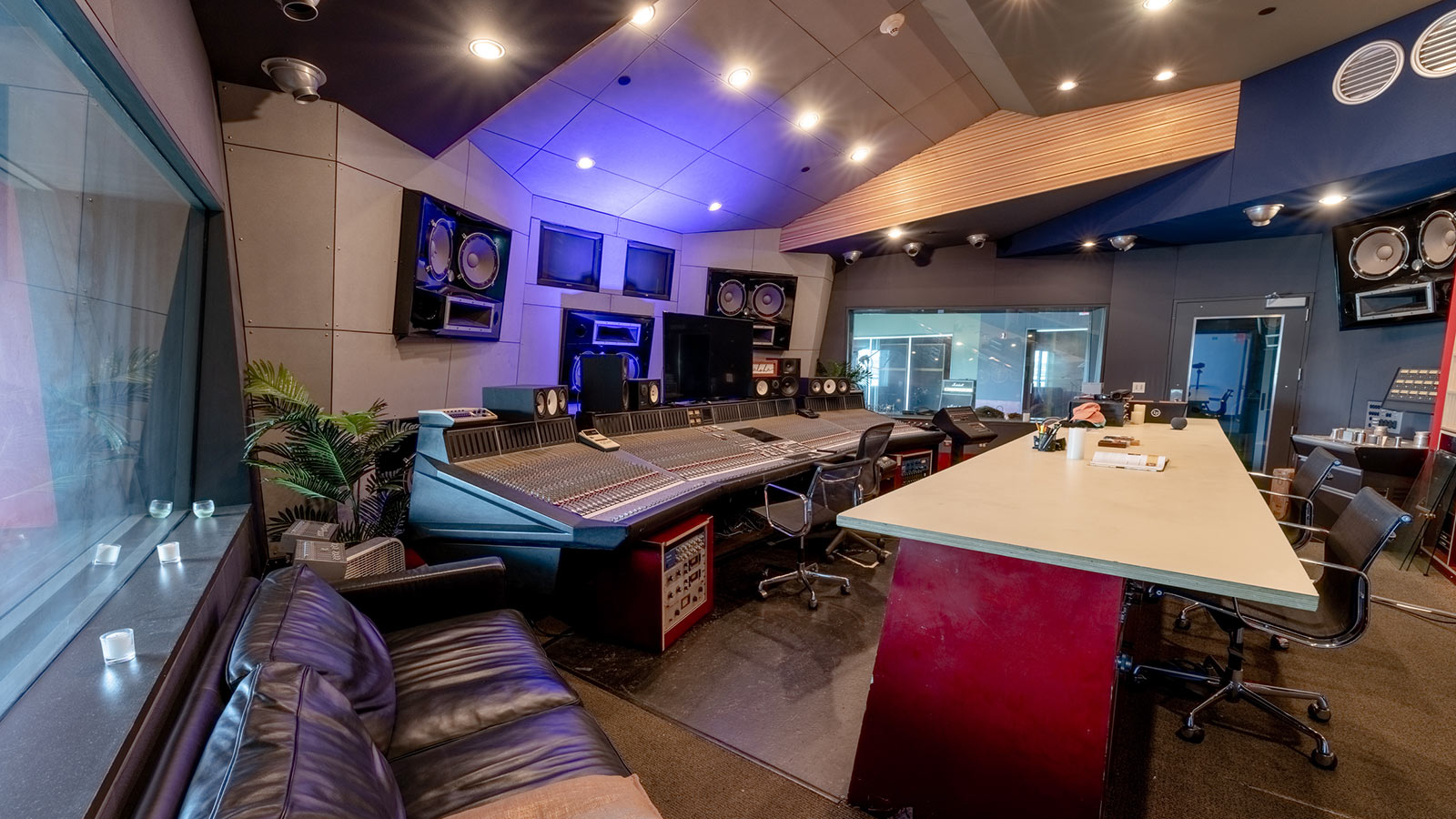
Step in the Spicer brothers, who later in 2022 had both the vision and sense to see the dormant studio’s fabulous potential; recognize its huge creative and cultural significance for Hawaii; and had the much-needed investment capital, significant business acumen, and entertainment industry experience to refurbish and broaden the studio’s offerings. After a herculean effort by both brothers throughout 2023, we fast-forward to September 2024, and the fruits of their labour are very clear. For us, Amphion units first entered the studio in 2018 – with our flagship Two18 monitor along with a customized Amp1000 amplifier. So we were exceptionally pleased to see this “studio resurrection”. But now, a little bit about the brothers, followed by a Q&A session with Kyle Spicer, held in the beautifully-appointed Studio A control room:
Kyle Spicer: Artist, Songwriter, Producer, and Sound Engineer, Kyle has over three decades experience in the recording and entertainment business, most recently as John Fogerty‘s (Creedence Clearwater Revival) recording engineer. Kyle is also a highly-accomplished singer and award-winning songwriter. He oversees all the recording and mixing at Island Sound Studios, along with the monumental tasks of studio management and studio maintenance. A Californian, he is now based full-time in Hawaii.
Bryan Spicer: Film/Television Director and Producer, Bryan’s oeuvre on both the small and large screen is astounding, and he is a long-time resident of Hawaii. He has directed TV shows such as Castle and 24, as well as directed episodes of Day Break, Bones, CSI: Crime Scene Investigation, Day Break Heroes, House, Invasion, Killer Instinct, Prison Break, Vanished, The X-Files, The Lone Gunmen, In Plain Sight, and also directed feature films For Richer or Poorer, McHale’s Navy, and Mighty Morphin Power Rangers: The Movie et al.
Kyle, when and where did it all start for you in this industry ? Who were your main influencers/mentors, and who are some of the notable figures you have worked with ? Your brother Bryan – what drew him to the visual medium ? Where did he gain his skills and what are his favourite genres to work in ?
Well, I initially started as a musician, then worked hard to make it something that I wanted to do for a living and do for my life. But as usual for a musician, at some point you realise (chuckle) … “Oh ! I’m supposed to make money from this !” But I stayed with it, and I worked in a professional capacity as a singer. My first money was really made from doing demo-work as a singer. I was also in original bands, and mostly sacrificing any regular employment to do that. I didn’t make a steady paycheck through demo-work, but I could at least make some money from it. I was always the guy recording my own bands, so I was a technical-creative as well as a songwriting-creative.
As life went on, I ended up learning more technical stuff, and also the equipment repair side. As a result, I ended up working for John Fogerty, which got me back into the recording side of things again – working for him for a number of years in different creative aspects. While a really professional work environment, it was very friendly. I didn’t consider that I was just an “employee”, and we did a lot of work together until I came out here to Hawaii. This studio really needed someone who could handle a multi-facted business and facility … everything from equipment to day-to-day operations that needed to be figured out and reinvented for the modern age.
My main influencers were always singers. I was always motivated by the musical side of it, wanting to make my own material better, my own songs better, and figuring out the technical things to do that. Then it morphed into working on other people’s music. But I never actually went into the professional field as a producer/engineer as if that was my actual technical profession. I had other acquaintances and friends that had, and I worked with them on a number of projects. Until I worked for John Fogerty, I never actually thought this was something I wanted to do. I did it anyway beforehand, but I never thought “I wanna go and produce and record other artists !”.
My brother started right out of high school. My dad was in the movie industry as a producer for TV shows, and he got my brother a job as a production assistant on a TV show. And through that, he worked his way up in the industry from the very beginning, showing he was a really hard worker and creative behind the camera, eventually becoming a DGA Director in his mid-20s – directing his first TV show at 25. So, Bryan’s been doing this a long time, and he’s been very fortunate as a director. He’s just been constantly busy for decades. He now runs his own company Sight and Sound Productions. That allows him more creative freedom to do commercials and independent films, and show what he wants to do from a creative standpoint. That seems to be apparent to me from the great things he’s been doing lately.
You inherited a place with brilliant potential but in need of maintenance and refurbishment. The SSL consoles in the studios were reportedly the biggest in the world at one time. When did you officially re-open the renewed Island Sound Studios for business ? Give us an idea of how much work you needed to do to bring it back to its former glory ? And your own technical-capacity regarding studios and studio-gear, where did you learn those skills ?
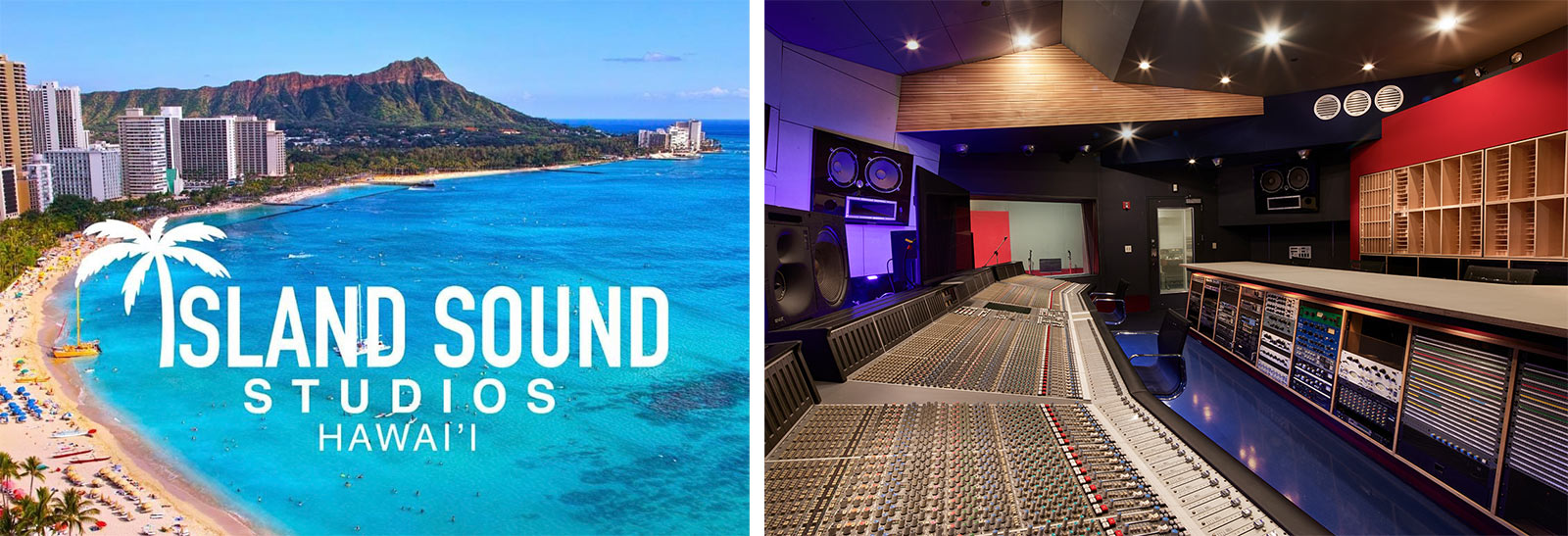
We opened around November 2023, when we officially announced our grand opening. We were technically open before that, but we just didn’t have all the facilities running – though we were still doing some recordings here. There’s still stuff to do … It’s a constant process, for sure. I mean we’re sitting here next to a 1990s SSL 9000J. While I have new Atomic Instrument power supplies that now allow me to turn it on and off, I still have to wonder when I go through a channel if everything’s going to work on that channel. So, I have the reliable channels and the unreliable channels. So instead of using it like I’ve got the whole thing, I have this (section) but I only use that (section). And if this doesn’t work here, I can patch over there. I’ve got redundancies and extras. That’s all you need. This console here on the ground floor has 112 channels. The upstairs console has 96 channels.
As for my repair/tech skills, they are self-taught. I just figured it out. I never went to school for it. I did repairs at a very-high-volume audio repair shop for three years. I kind of ran the repair side there, then ended up working on many things, picking up a ton of knowledge as I went. I’ve gotten the confidence to just take something out, unscrew it, and open it up … I’ve always done that everywhere. I had no fear in taking things apart and breaking it. This (the studio) was a challenge though, where I was like, “Hmmm. I don’t know ~. Let’s just dig in and figure it out.” But some tasks took me almost a year, as certain gear was finnicky and particular. You put it aside for a while until you really need it working. And now these units are invaluable.
When this place didn’t have me here, or there was no traditional repair guy available, when gear would break or stop working, it would be put aside to be sent to the mainland to be fixed – which it never did – or it just sat in the rack and was not turned on anymore. But I’m a sponge for knowledge on this stuff, as I’m a total gearhead … as long as I have the internet. But here, there were a lot of manuals and service-stuff and documents. So I was lucky in that sense. Even these SSL consoles had binders that came with them that had all the schematics for the many, many PC boards throughout … It was literally like working on the space shuttle though. There’s so many components, so many PC boards …
In its over two-decade history, who are some of the most legendary musicians or iconic albums that have been recorded there ? And since its re-opening, who are some of the notable clients, local and/or international, that have visited ? What are some of the unique merits of Island Sound Studios that attract artists and producers to record here ? What’s the drawcard ?
With this studio, legendary musicians and legendary albums, I think are two different things. Not only have legendary musicians been here, they’ve also made legendary albums as well. They didn’t just pass through. Like Kanye West made 808’s and Heartbreak (2008) and My Beautiful Dark Twisted Fantasy (2010), which are two of the seminal hiphop albums made almost in their entirety here. These sessions have spawned the most industry stories like “That was a moment in history !”. Dr Dre’s been here seven or eight times, and just about everyone in hiphop has been here at one time or another. “Empire of the Sun” was just here, and what they did record will be coming out next year. We’ve had a lot of songwriters out here, a lot of local, mainland US, and international artists. Lots of TV shows and ADR work too I can talk about – after they come out !
As for a “drawcard” … We are unlike any other studio in the world. If you can afford to go and record anywhere you want to record, then this place should be at the top of your list. It has things you cannot get anywhere else. These days, it’s not like “I’m going to go there because of a tape machine” or “I’m going to go there because of this or that …”. (Primarily) You go there because of where it is, and how it’s going to inspire you. And you just make sure they have the proper equipment. And we’ve got that, and then some ! What we do have is everything – a view of the water, on the water, in Hawaii, and it feels like that … Whatever style of music you’re making, you feel that within it. By the way, our STUDIO A with its 112 Channel SSL 9000J is the largest in the world. And our STUDIO B is equipped with a 96 Channel SSL 9000J.
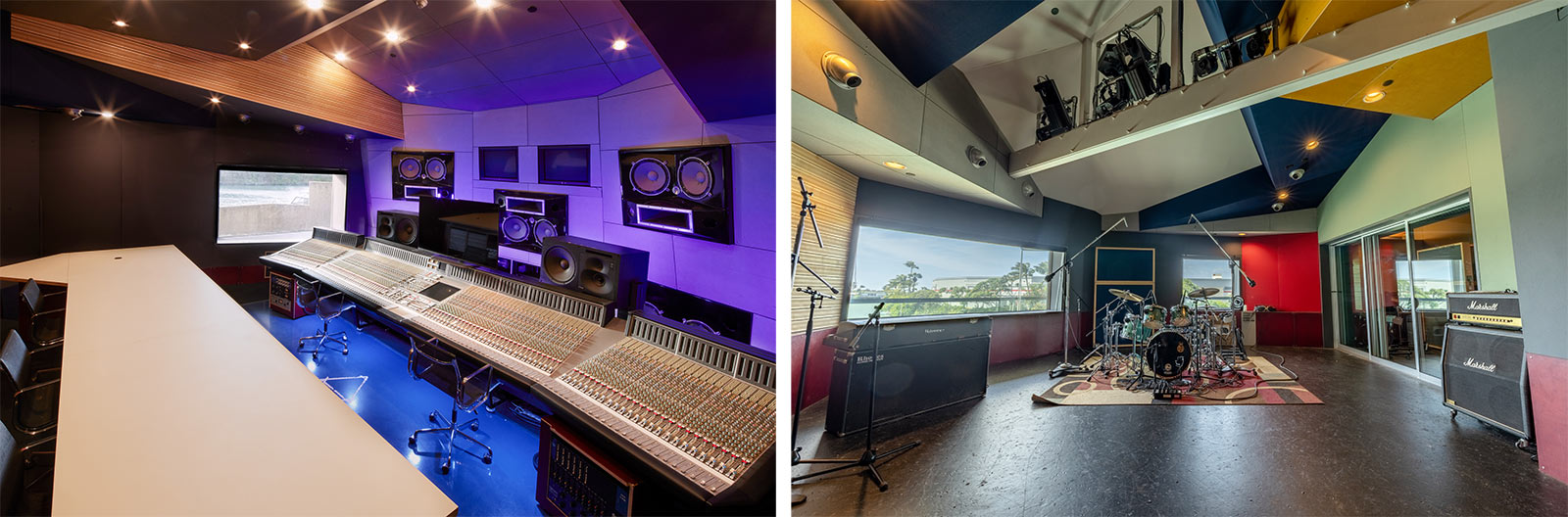
We’ve been privileged to see and feel firsthand both this Hawaii and Island Sound vibe. But I think readers of this interview will, at the very least, pick up from your words, and also the fabulous visuals on your homepage, a “taste”. Studios are largely built for function, administration, and production. But when you walk into Island Sound, you’re greeted with that, plus an astounding array of creative and entertainment spaces. I’ve only ever seen this approach with Bob Clearmountain’s “Mix This” …
Bob’s “Apogee Studios” that he built ? … Yes, that’s a great idea. I’ve used that as an example with my brother in trying to describe what we are doing here, and how Bob does it – with his KCRW (89.9 FM) broadcast, his camera set-ups, and how he has the PTZ camera systems around so they can do live streams. He’s got more of a budget and eyeballs on him to actually be able to make something happen at that level than we do right now. But I’m utilizing what we have, and trying to get it up and have it be a value-adder – trying to see how it all fits in.
Seeing that we are a local place, everyone who comes here is from the local population and they appreciate it. We haven’t really tried to appeal to tourists, yet I’m not really sure we need to. But the way we would like it to develop is as a “hotspot” – like when you’re in town, that’s one of those destination hotspots you might aim to get into. You’d think ahead and see who’s playing, and buy a ticket when you’re in town, as nestled within our studio-complex are our two very special venues: THE LOUNGE and THE VELVET MONKEY.

Regarding Dolby Atmos and Sony Reality Audio formats, you’re more warm to the notion now than you were a year ago. Do you see yourself offering this sonic service here ? And if so, how soon ?
I’d like to be able to offer the most modern formats in this place, not necessarily for education, as I think we have that now on the island. However, I think what we could offer is – since we can do the higher-level professional mix – is that along with those mixes, rather than having to come here specially to do Dolby Atmos, we can encorporate that into the full package. Then we won’t have to send clients somewhere else to complete their project with inferior equipment.
You’ve had some time with the Two18s now. What are your thoughts on their performance ? How accurate and revealing do you find them ? Any other Amphion monitors caught your interest ?
I love them. I had then upstairs for a while (Studio B). I would use them for other clients who would come in and look at them and say “What are those ?” And I thought “Oh !”. People would come in and ask (about them) in the heat of my mix. But I just want to mix and not think about explaining what they were. Down here in Studio A, they fit into the room because they’re not trying to take the place of something. They’re much better down here because of how I utilize them in this room. Upstairs, I was trying to replace something with them. I think I was trying to force them into the Studio B as in “I’m just going to stick these speakers in here next to the Genelecs and everything else”. I don’t need NS-10s for this room (Studio A) at all. I don’t need that little, reliable, tinny sound that you just know, because that’s not what I do. And that’s not what anyone would do in this particular room. I needed to have another (sonic) representation.
So, basically in Studio A, I have a three-tiered representation of (studio) mains, the (1038) Genelecs, and then I needed something better for the smallest (third) tier representation – the Two18s. However, the Two18s sound at least as big as the Genelecs – surprisingly ! The Two18s have got more mid-range, so you hear more vocal. They’re so much better for ADR or anything like that. For what I’ve been doing now, it would probably be nice to have one more of them as a centre-channel too – to do a three-way reference. A true reference is what I would use them for when I place myself in this (sweet) spot, as when I’m searching for something specific or nothing specific at all, these will reveal it. I like them. They’re a surgical tool ! They’re not meant to playback like you’re at a party. It’s meant to forensically tear it (the sound) apart to see what would make it better or what isn’t making it sound so good. Oh, and I’d like to have a listen to those new One25As too !
For more information on Island Sound Studios: www.islandsoundstudios.com
For more information on Kyle Spicer: linktr.ee/kylespicerofficial
For more information on Sight and Sound Productions: www.sightandsoundhawaii.com
For more information on Bryan Spicer: www.imdb.com/name/nm0818465
For more information on Amphion Two18: Two18 Studio Monitor | Amphion
Follow Island Sound Studios on FB: www.facebook.com/IslandSoundStudios
Follow Island Sound Studios on IG: www.instagram.com/islandsoundstudios