
One18: The More You Know It, The More You Trust It – Develop a Relationship with your Speaker
In Conversation with Award-winning Taiwanese Composer, Producer, and Musician: Chia-lun Yue
Taipei, Taiwan – With a population of 24,000,000 people on an island not much larger than the State of Maryland, USA but with four-times its population, Taiwan maybe small geographically, but it’s a powerhouse – not only for its semiconductor and computer-chip industry, but for the output and energy of its domestic entertainment industry too. We had the wonderful opportunity to interview someone deeply immersed in the music business, Golden Melody Awardee (GMA – Taiwan’s most prestigious music award) Chia-Lun Yue, on his work history, his latest release, the Taiwan music scene, and of course, his thoughts on Amphion too.
Now a producer, composer, engineer, and musician, what lured you to a life of music, and how did you get your start ? What inspired you to study abroad, and how was that experience ? Who were your main influencers in this industry ? What genres do you tend to work in ?
I was introduced to the classical piano at a young age, though I was not a kid that willingly sat in front of it … After receiving my first guitar at age 12, I began to play pop/rock songs, and tried to write my own music. In those early years, I also discovered all kinds instruments and aimed to understand their “language”. Around high-school age, I found Jazz to be my passion, even though I was performing as a singer/guitarist in a young rock band. However, the real turning point came in my senior high-school years, as a Rotary exchange student to Oregon USA, after playing double bass for the school’s symphony orchestra, that I decided to apply to Berklee College of Music. I always dreamed to be a producer, and Berklee was the only school I could find with a great music production program.
I would say the music of Miles Davis, Bill Evans, and Keith Jarrett were my main influences, and they opened my ears to other various styles and artists too. Composing-wise, I believe Dave Holland, and Avishai Cohen, Darcy James Argue, Hiromi Uehara, Pat Metheny, and the psychedelic electronic music of Shpongle – basically all jazz cats ! I wasn’t really aiming work in any particular music genre at that time. I just felt that a jazz “mindset/philosophy” (not so much “jazz playing”) could meld into any genre, and I wanted to bring some jazz taste into pop or any of the work I was involved in.
You’ve been the producer behind some very notable and award-winning artists in Taiwan, as well as created a significant body of your own work too. Tell us about some of those experiences and recordings. Looking back now, which of these projects stand out most for you ?
First of all, I’m not a producer with a domineering personality, as I really enjoy the process of working with artists and helping them find and develop their own music picture. And I try not to explain using artist stylistic-references, as I prefer their own character on show on the stage, not mine, and not those references artists. I’ll only take over if I find they have no direction or treatment in mind. I like to play an “invisible” role. I’ve been very fortunate to be involved with many different types of music – Classical, Jazz, Hip-hop, RnB, Electronic, Gospel, etc … and almost all have received award recognition. I like to experiment, and have a strong desire to create something completely new. Creativity is spawned by limitation, and that’s the approach I take in every project I’m involved in.
As for past works that stand out to me … I would say the now-disbanded “Semifusa” classical string sextet and artist “YELLOW” are the ones I best recall.
Semifusa wanted to do a standard crossover album, but I thought that a boring concept. As a result, I decided to create a structure that explored wider possibilities for “strings”. I set a creative limitation by using a “DJ” – DJ Question Mark (artist with a classical music background). Then I gathered composers from different places and had them write music for a Sextet and a DJ – in two stages. Firstly, write something with a story but be prepared to see it ruined by a fresh DJ’s ear (not just a remix). Secondly, after that DJ presents the “ruined version”, workshop the idea amongst the composers, and remix/re-write the work from the DJ’s rearranged composition. Everything must be “live performable” – all the sounds must come from strings and the composition itself. So it was a two-way duplex-communication where composers must know what DJ can do, and DJ must know how composers work.
It was quite a challenging job to convince the composers to write something that might be drastically altered afterwards, and understand what sound design could do to the strings acoustically and effects-wise. So everyone in the project must be very open minded and be prepared to experiment. The final product brought great enjoyment.
Producing artist “YELLOW”, on the otherhand, was the ultimate example of bringing my Jazz influences into a Pop, Funk, RnB production. YELLOW is an extremely talented artist, with an open mind and full of creative ideas (and another multiple-GMA winner). A strong jazz-mindset drove the music, though you wouldn’t call it Jazz. There were lots of recording secrets and tricks we experimented with in creating his works, as we were not just looking to produce an easy-listening work. (Editor’s Note: Millions of views. Really worth a listen YELLOW – YouTube ).
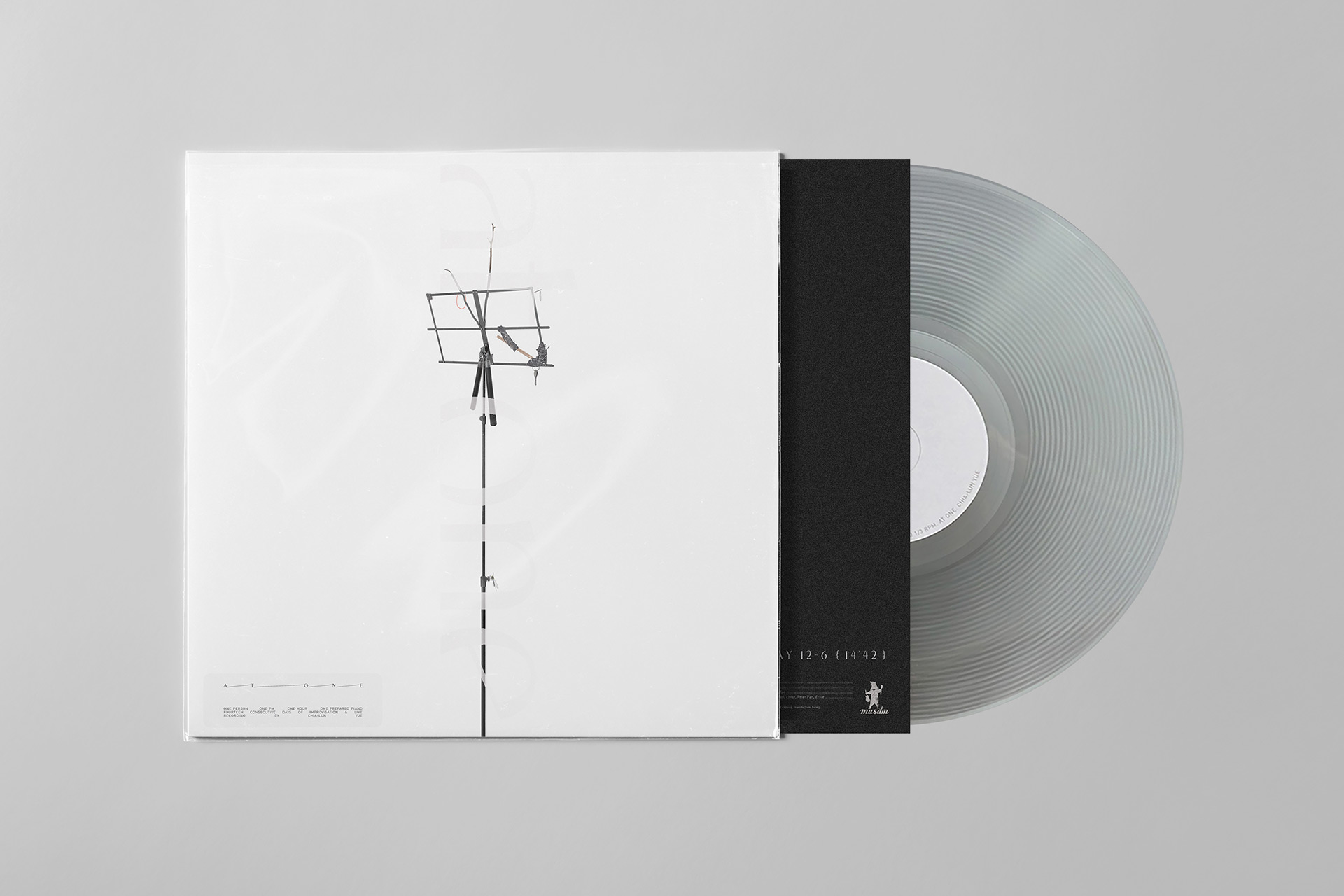
Your GMA-nominated 2023 album “At One” has a short but intriguing description: ONE PERSON, ONE PM, ONE HOUR, ONE PREPARED PIANO. What is the backstory behind its creation ? “Prepared piano” has been used by many music legends from John Cage to Dave Brubeck to Brian Eno. What was your approach here ?
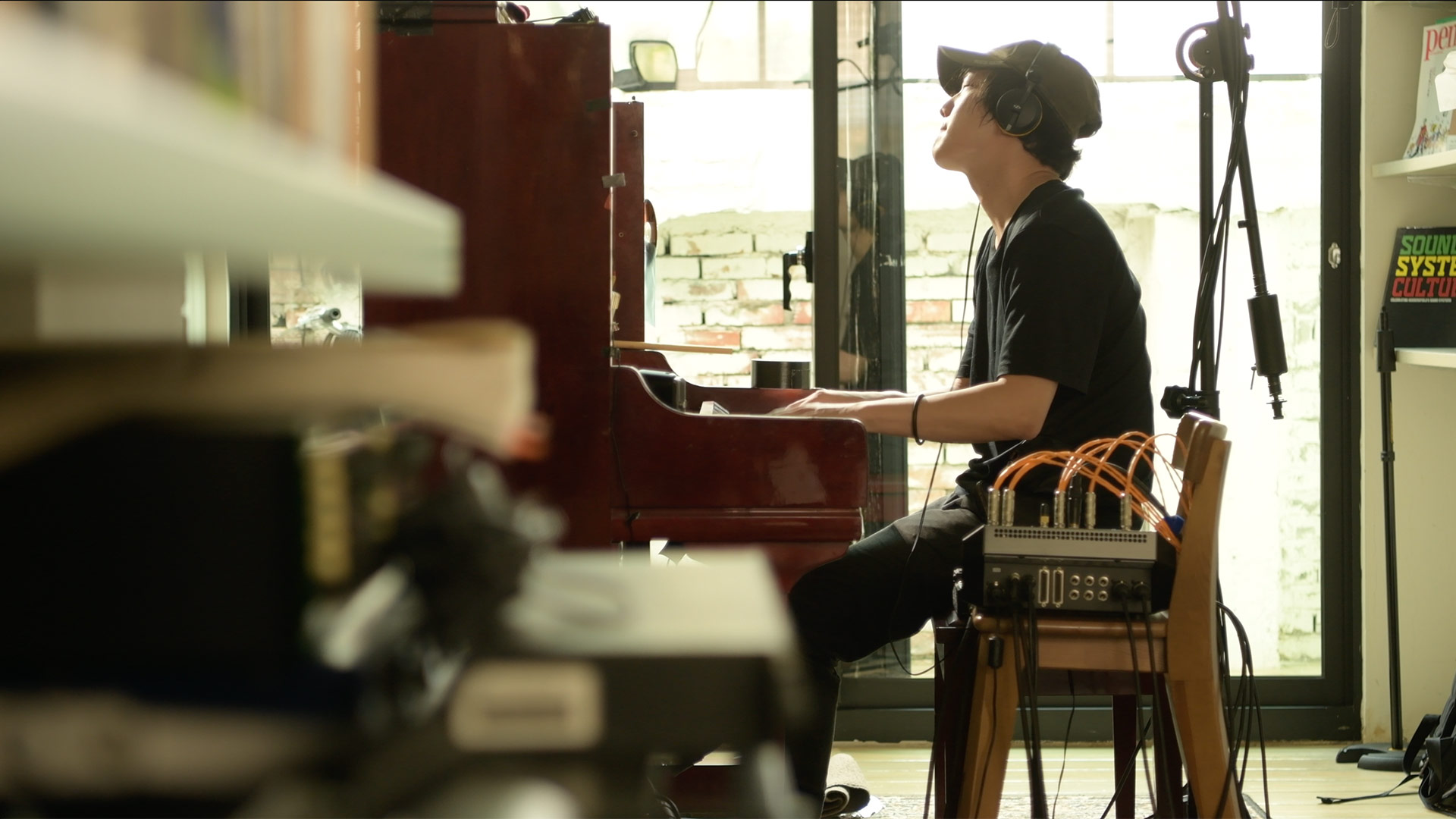
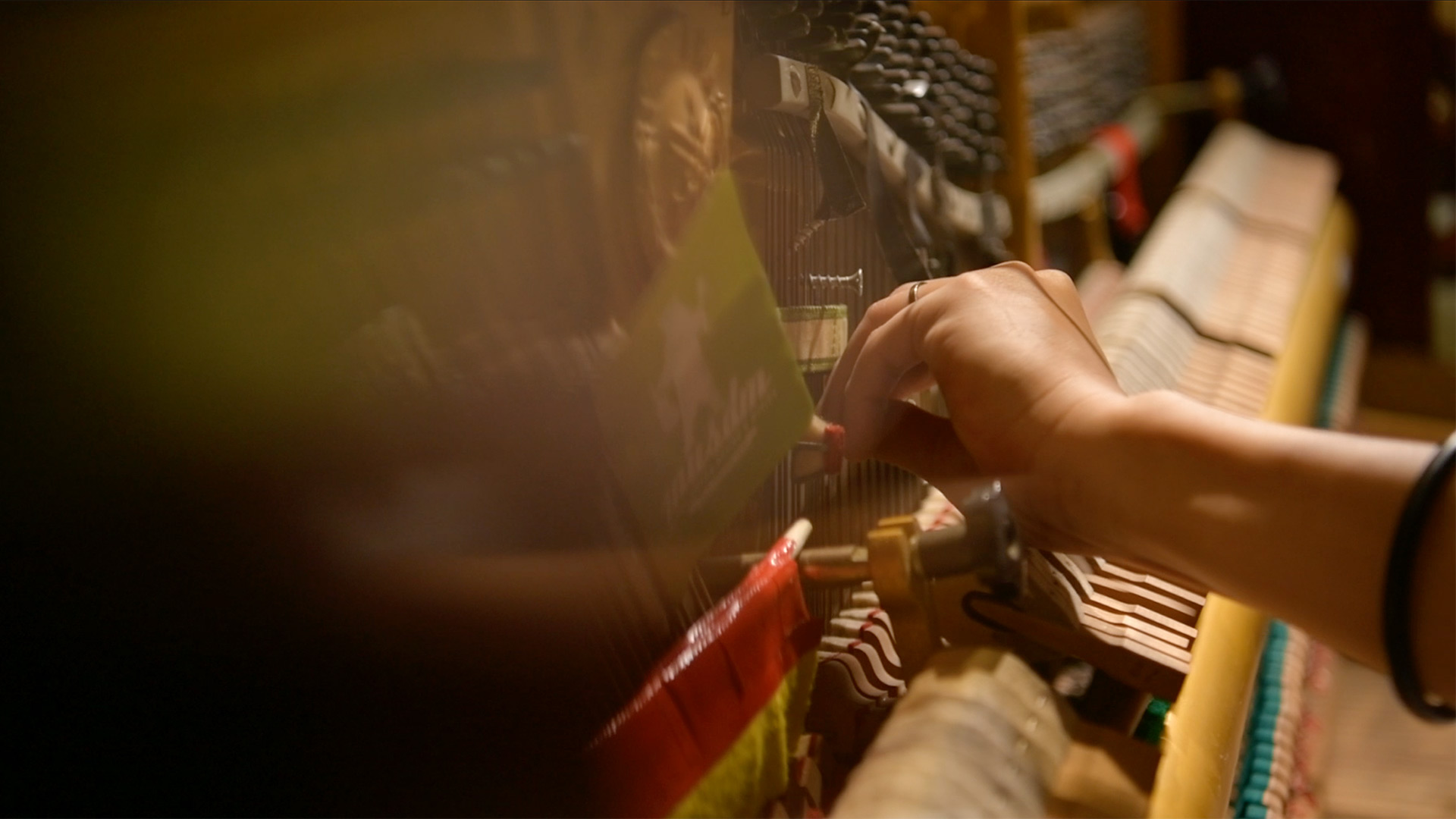
“At One” recording was produced during the pandemic period. One day an upright piano with a beloved, warm family history happened to arrive in my company’s kitchen. At that moment, I was writing music for Taiwan’s Golden Horse Film Festival and Awards opening ceremony. I decided to make something out of it, and found that “prepared-piano” can send a lot of messages via the objects you choose – sometimes are not only sonically, but also a story behind choosing them or thematic concept. Prepared piano is akin to an acoustic synthesizer. I always wanted to figure out a way to create “Chance” music, and aimed to set up a completely free – but still with a limitation – production process. Usually I like to compose by using one take of improvisation, and leaving me no track-choices to pick, just using what I have around me, and making something cool out of it.
So here were the rules … no pre-composing nor any pre-meditated musical material in mind, no editing after recording just select the sections, 1:00 pm – 2:00pm session, “not-so-prepared” prepared piano so that new objects can be randomly select each day, and only myself as performer. In the end, prepared piano is not the main point, as it is all about the concept creating an environment that could brings out “flaws”(something not expected to be heard) as inspirations. Lastly, keep “Asian Sound” planted in my mind. Let me delineate:
ONE PERSON – Face the truth about myself in this “over-production” world.
ONE PREPARED PIANO – Chances or flaws, variable, unpredictable, freedom.
ONE PM – Discipline.
ONE HOUR – Limitation.
With rules above, I hope I can send out a message to this over-produced music scene nowadays, that music comes with feelings, not via the fancy gear nor the fancy plug-ins you use. And “perfection” might not as perfect as you first thought.
How prolific is the local music industry in Taiwan? And how global is its appeal ? Is Mandopop still a dominating force or is Taiwan finding its own distinctive voice ? With strong competition from international artists, and wrestling with a language barrier outside of Chinese-speaking regions, what’s the way forward for artists seeking both a local and global identity ?
Extremely prolific, but not enough of a crowd to support the volume of artists. Only in few of the cases artists are very successful. Mandopop is still dominating here – if we are talking about the market from mainland China – but Taiwan definitely has its own voice and it’s pretty loud locally. The only question is that we are a small island with big energy and lots of creativity, but do we have enough power to support those wonderful musical ideas ?
For artists, I believe that they have to know who their front row audience are before we talk about the big picture. For me to stay international, you have to do it your own way, including language. Lots of artists thought singing in English is a way to approach the global market. I would say not really, unless you have a global record company as a “sugar daddy” or local overseas agency managing your business. Otherwise, it’s an open world. Make something out of yourself and speaking out for your culture is much more “international”. We are Asian and should sound Asian instead of trying to reproduce the sound from the US and Europe etc. They are great influences to study, but that’s not the blood that courses through our veins.
When and how did you discover Amphion ? You have our highly acclaimed “workhorse” model – the One18 Nearfield. When did you acquire it ? And how important a part does it play in your engineering and production sessions ? Are our claims of transparency and translation true for you ?
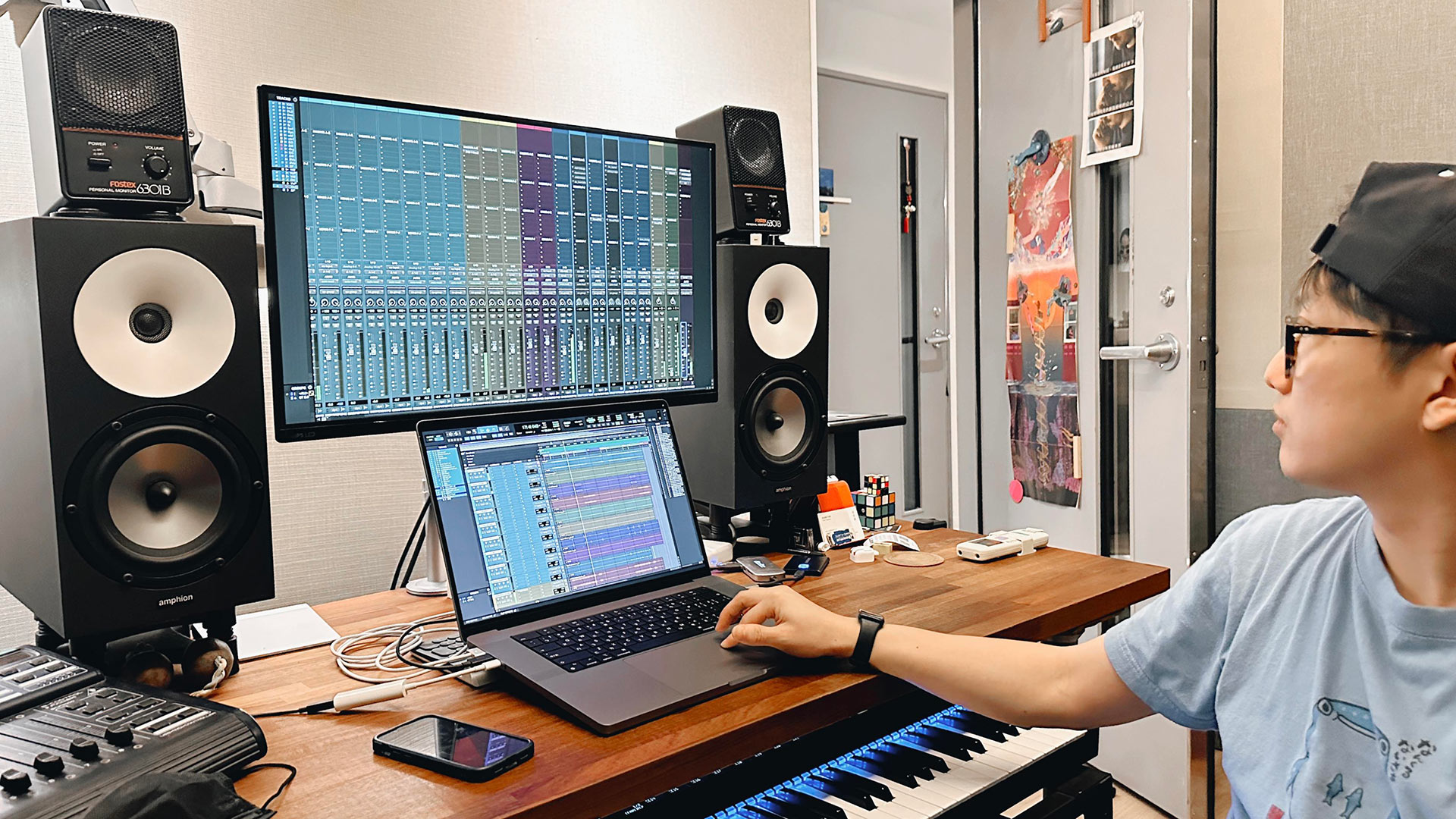
I think it was 2015, through Sound On Sound magazine and Jemy Lee from SonicLab Co. Ltd – Amphion’s Taiwan pro-audio distributor, that first introduced me to this speaker company. I purchased my One18 around 2016, as my Tannoys and NS-10 were not that accurate anymore. So, they are my go-to monitors, and are very important to me. I use them to check balance, frequency, and timbre, as well as check mix-versions from mains in studios. I also use them for sound design and film scoring projects – so, basically for everything. You name it ! For me they’re a good partner, and speak the truth. But I also believe it’s about your taste and practice, and developing a your relationship with speaker. The more you know about your instruments, the more trust you give them. It’s a two-way relationship. And besides that, I always tell my friends of their great-looking design … They feel great to look at too – not just a speaker but also a cool-looking piece of functional furniture in my room.
What’s on the horizon as far as new music endeavours that you can share with us – for both yourself, as well as some of the major artists you work for ?
Never-ending searching different way to create, in order to do that, I have change my work flow quite a few times, even changing DAW a lots of times too just to refresh my work flow. “At One” is only the start of my label plan. There will be more projects like it to follow up. I am aiming for an eclective music and life style universe with “At One” and the concept behind it. Also I just attended China’s biggest live TV Show Singer 2024 with YELLOW. His reputation is growing very fast at the moment, and we are cooking up his third album at the same time.
For more information on Chia-lun Yue
Listen to At One here: at one – Album by Chia-Lun Yue | Spotify
For more information on SonicLab Taiwan
For more information on Amphion One18